

Collaging works great as both an art form and a therapeutic practice. It’s not so much about “creating something” from scratch as it is about recycling, reshaping, finding new meaning or order, and bringing together things that shouldn’t make sense, but they do to you.
Most of the time, you don’t need a specific idea or direction before you start. You can simply go through magazines and paper materials, cutting out whatever catches your eye. Cut out anything you like without worrying if it matches; you can always pause later, review your pieces, and see if connections start to appear.

Working with analog collage rather than digital, you are challenged to get creative using only what is physically in front of you. You can experiment with different shapes and techniques, but the final result will always be unique.
The essential tools are minimal: just scissors or a paper knife, and glue. If you want to make the process easier, you can add a circle cutter (which can easily be swapped for any round object pressed onto paper) and a cutting mat, to make sure you’re not cutting through the next pages or the table (which can be substituted with a piece of cardboard).

As for materials, there is no need to buy expensive new magazines. Flea markets and thrift stores have lots of old magazines, newspapers, and children’s books full of great pictures. You can also pick up museum brochures, cinema booklets, tourist maps, and store promo flyers for free. It’s a sustainable approach that also keeps it cheap.
For my workshops, I tried to find interesting new collaging methods and creative prompts that would encourage participants to think outside the box and try something new.
Workshop #1: Making postcards
The first workshop took place right before International Women’s Day. The main idea was to create postcards that played around with stereotypical cards: the ones that portray women as weak or just as a “beauty token.”
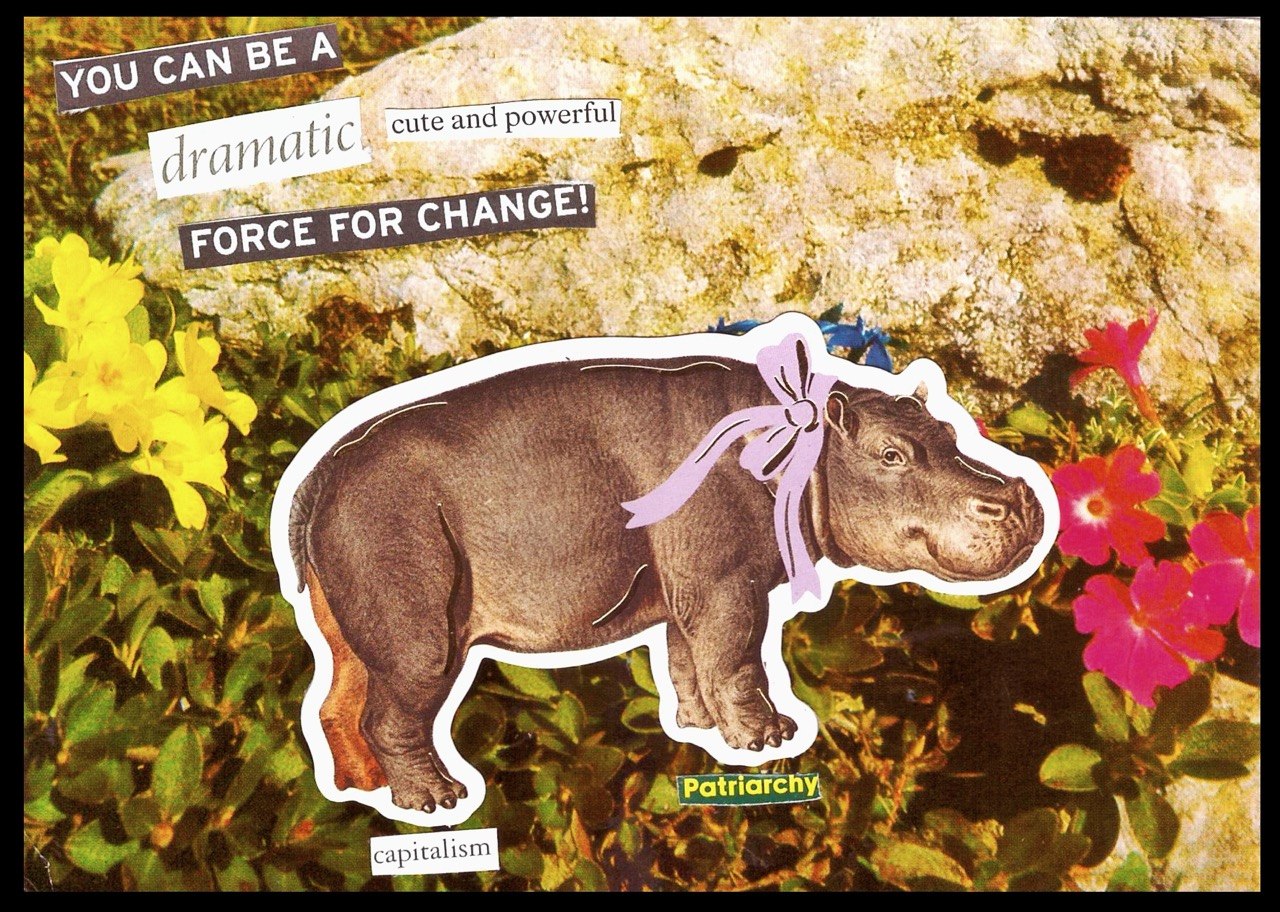

To make it even more ironic, I thrifted old postcards with flowers and “cute” pictures to use as our base.
Some collages included empowering messages for women, while others exaggerated the “traditional” roles of women in patriarchal societies. In the end, both directions were a comment on patriarchy.
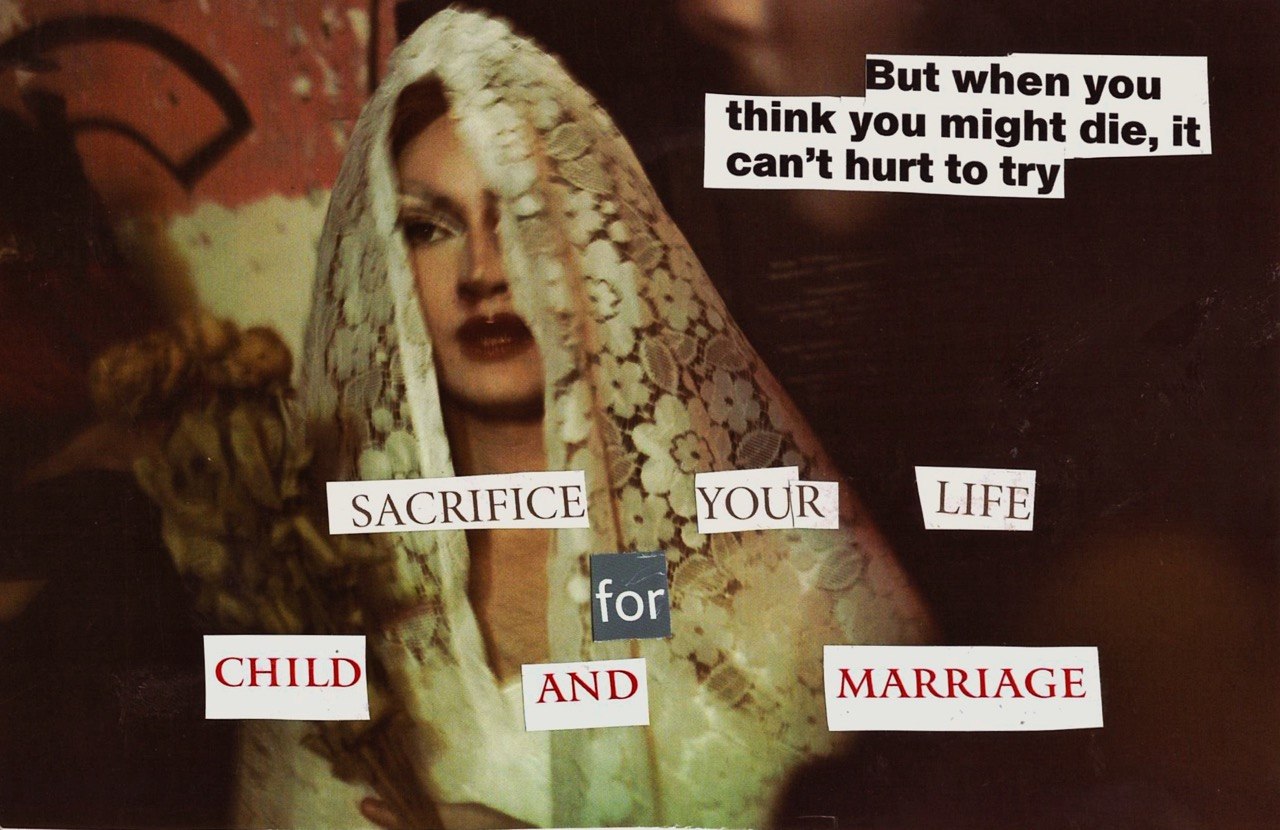
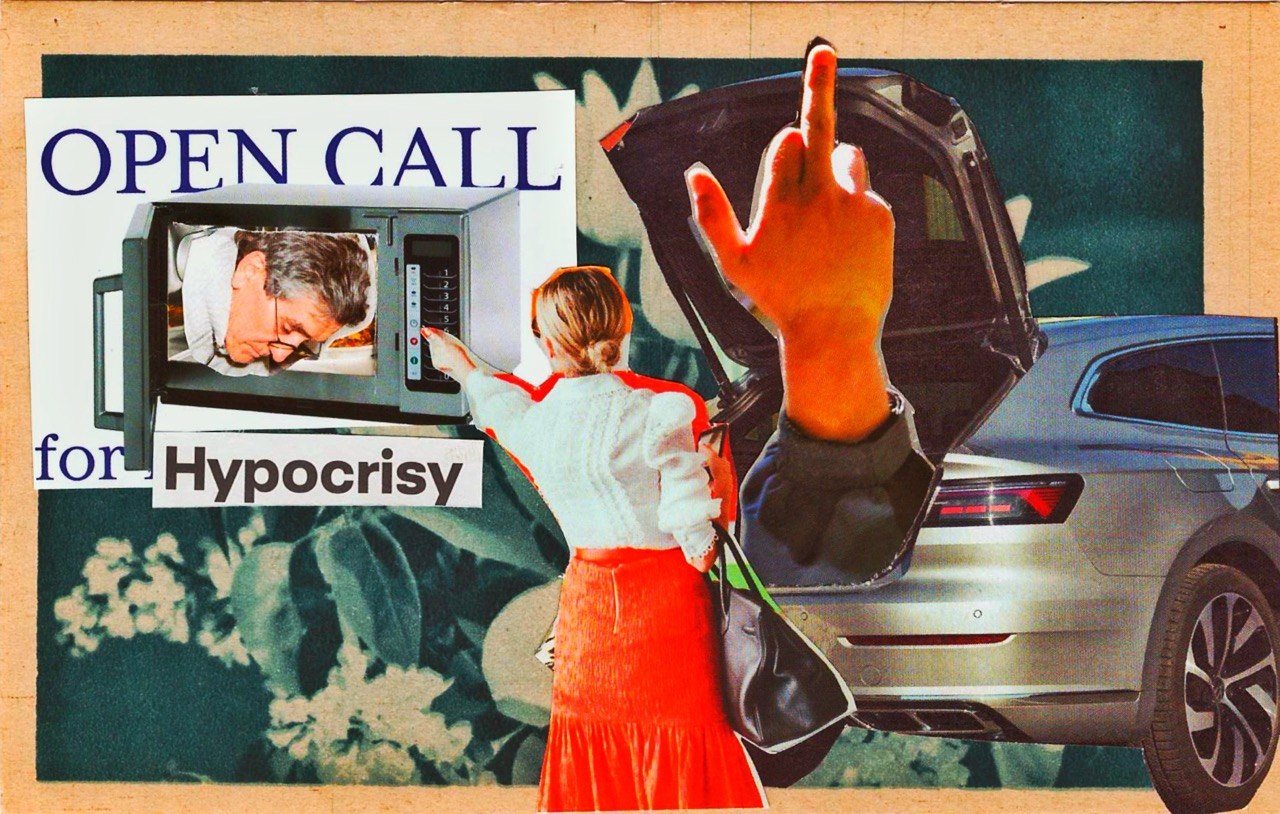
You can use this idea for any other topic. You can make postcards for their usual purpose, like a creative birthday card or a holiday greeting. But you can also see it as a fun challenge to create something interesting in a small format that you can give away or put on your fridge.
Workshop #2: Finding shapes and colors
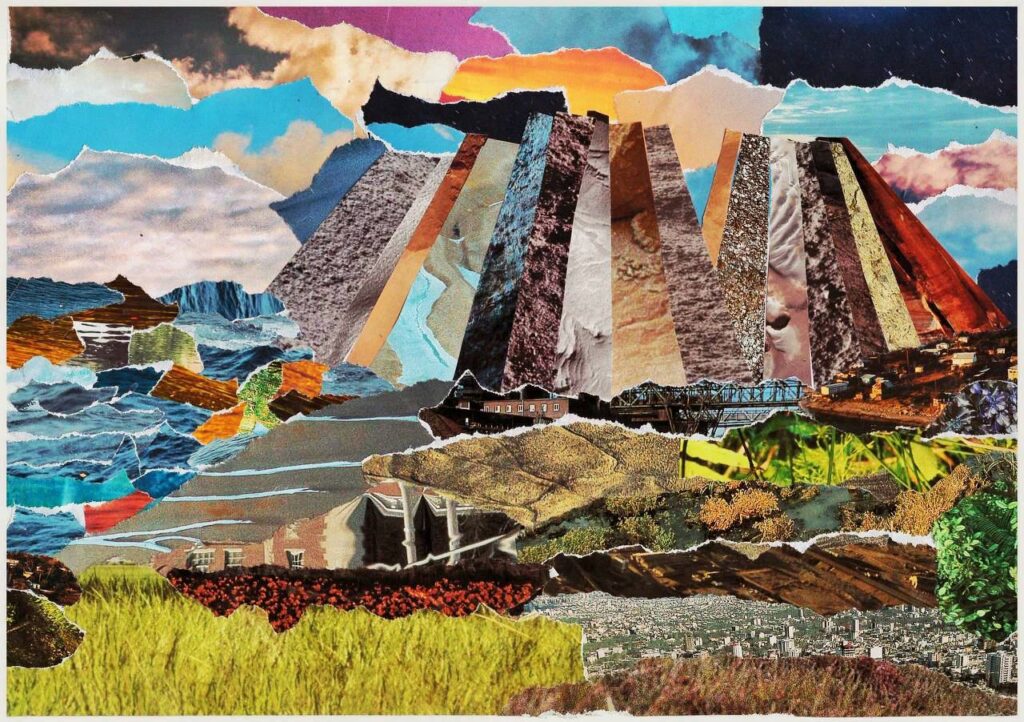
For the next workshop, we worked with colors, textures, and shapes rather than specific pictures. Participants could tear off pieces of paper or cut them into specific shapes to build an image. Everyone was free to decide how to approach it: what colors to choose, what parts to tear by hand, what parts to cut out precisely, and whether to include words or not.
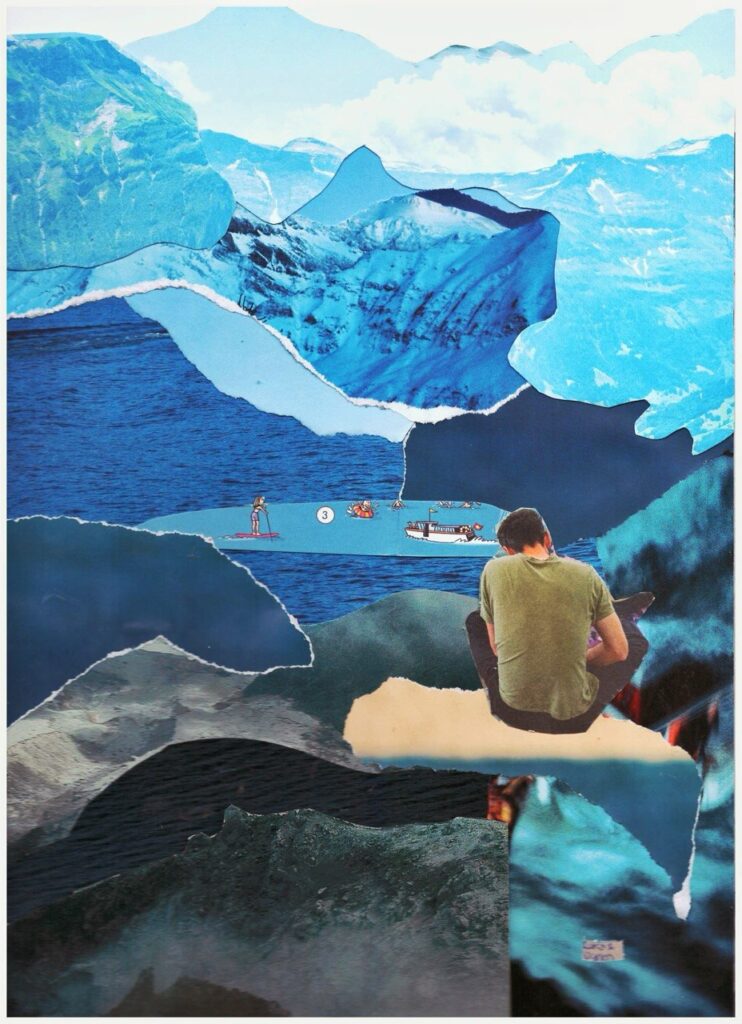
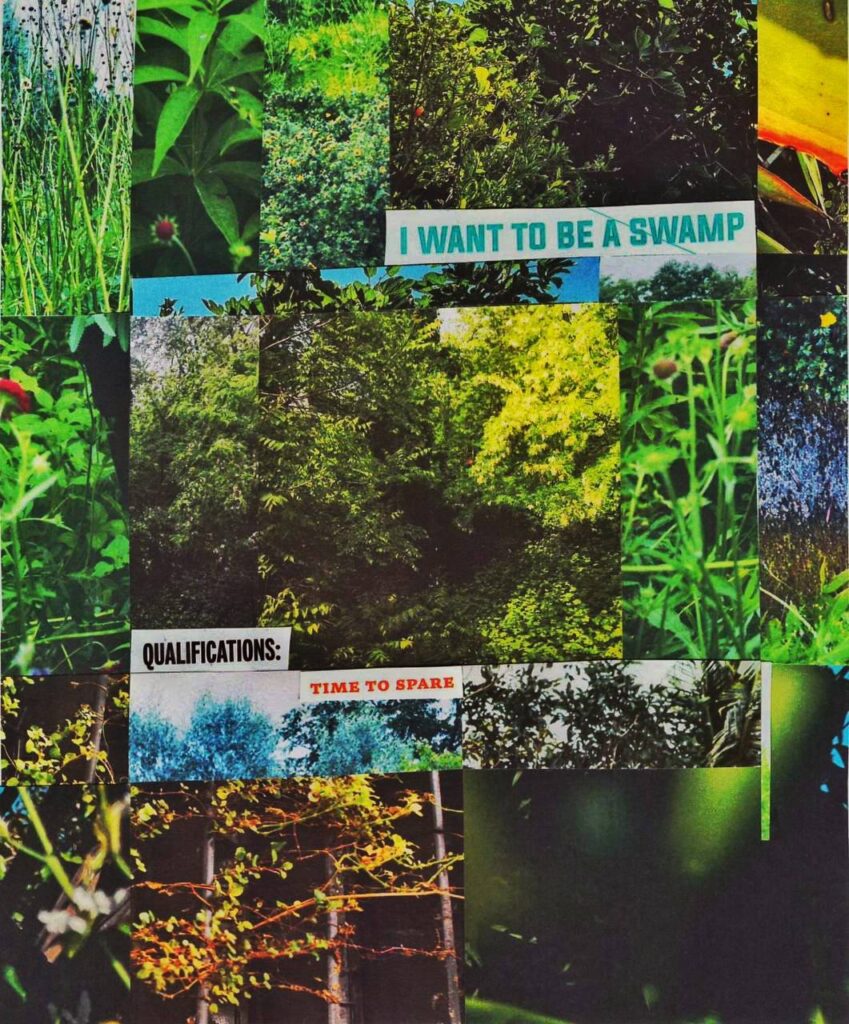

In this technique, it helps to have a rough idea of what you want your final piece to look like. Because of that, it’s a really nice way to recreate specific places, memories, or scenes.
At the same time, you can still just go with the flow. You don’t have to plan everything out, and you can simply decide on the shapes and colors as you go.

Workshop #3: Using children’s rooms
This workshop had a very specific prompt, but everyone was still free to interpret it in their own way. I thrifted a magazine full of pictures of children’s rooms, and participants were invited to use it however they wanted.
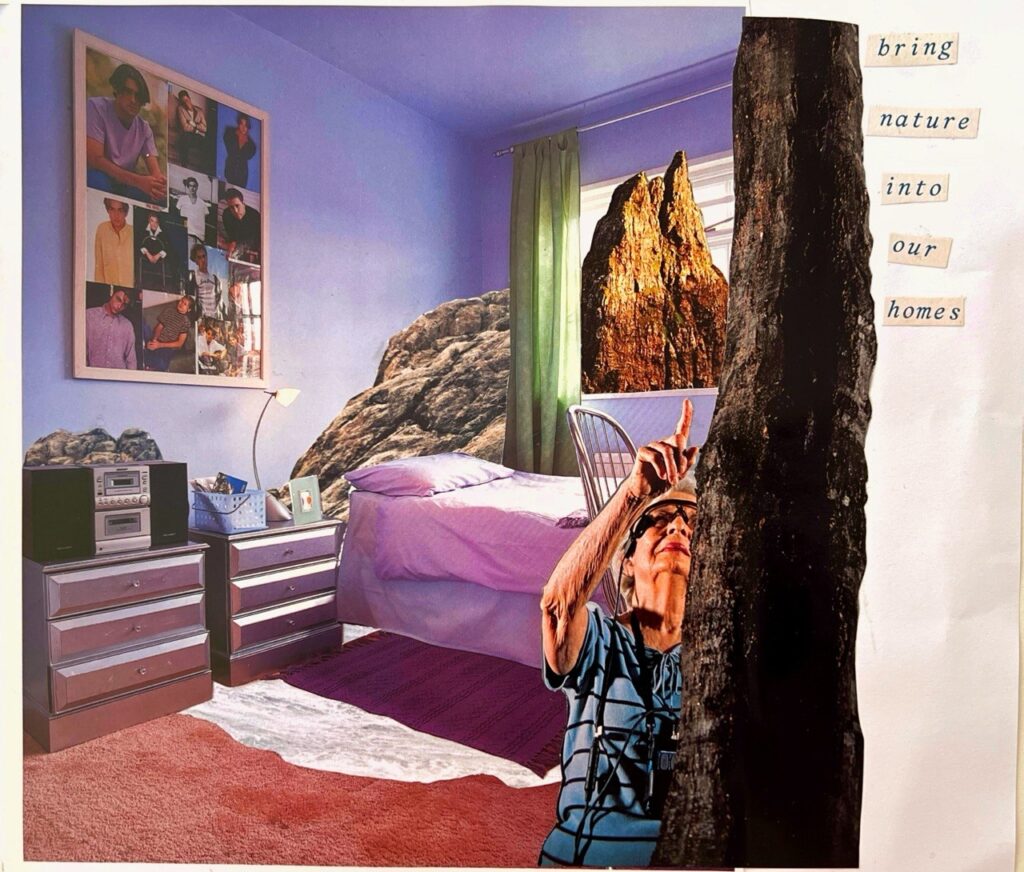
Some used the photos to recreate their own childhood bedrooms or the dream rooms they wanted as kids. Others simply used the room pictures as a background for completely different ideas.
It is really interesting to see how one specific prompt can lead to totally different results.
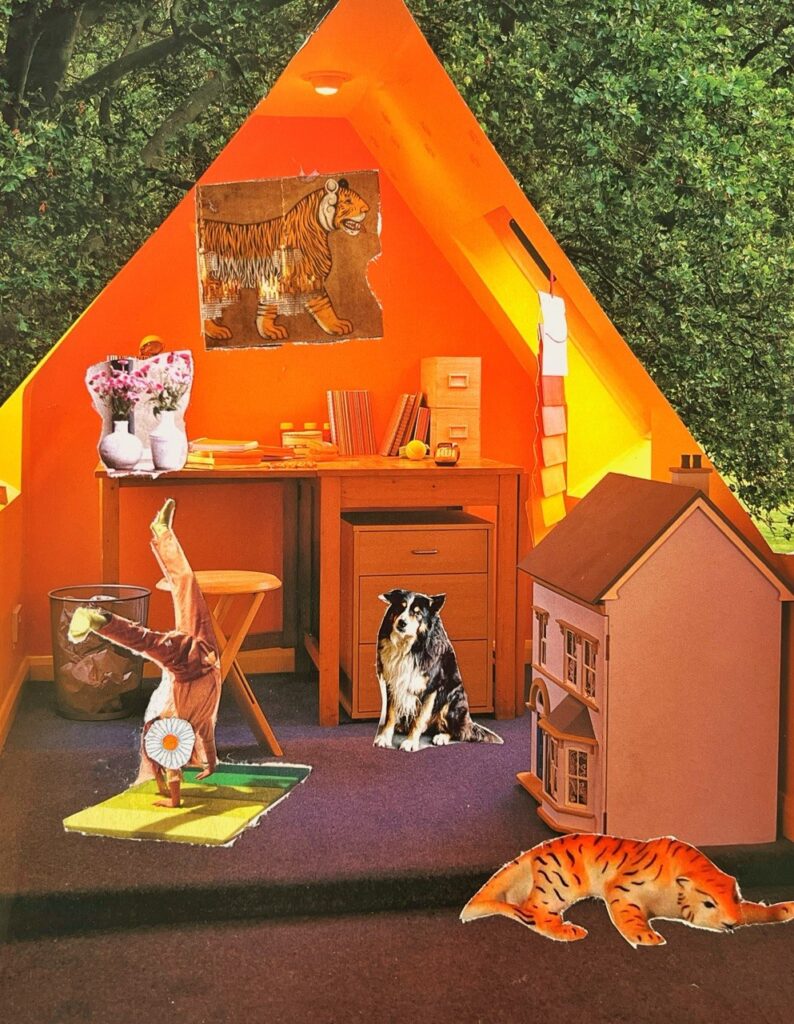
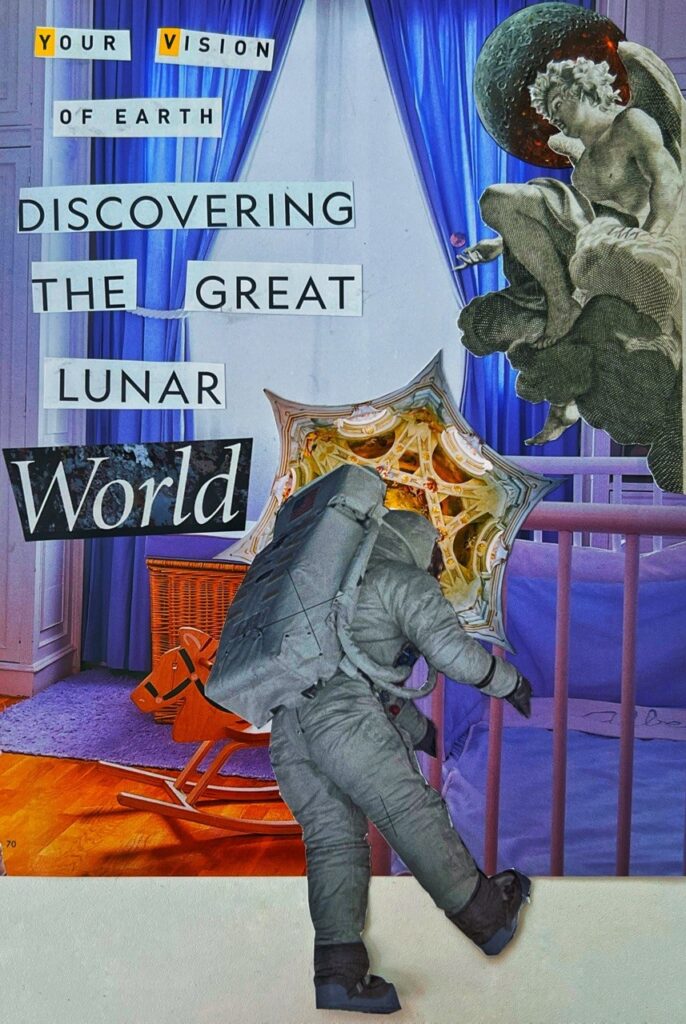

There are many more ideas for prompts that can make people think outside the box. For example, you could prepare only pictures of animals or plants and let people arrange them however they want. You could also use a catalog of cars, apartments, or groceries, and let participants play around with those themes.

Workshop #4: Working with text
Working with text can be challenging, but it’s always interesting to see what you can create from random words and sentences in magazines or newspapers. You can build your text word by word or even letter by letter, which works well if you already have a specific phrase in mind. You can also find longer sentences and change them by swapping out just a few words: the more absurd and unrelated the new words are, the better the result.
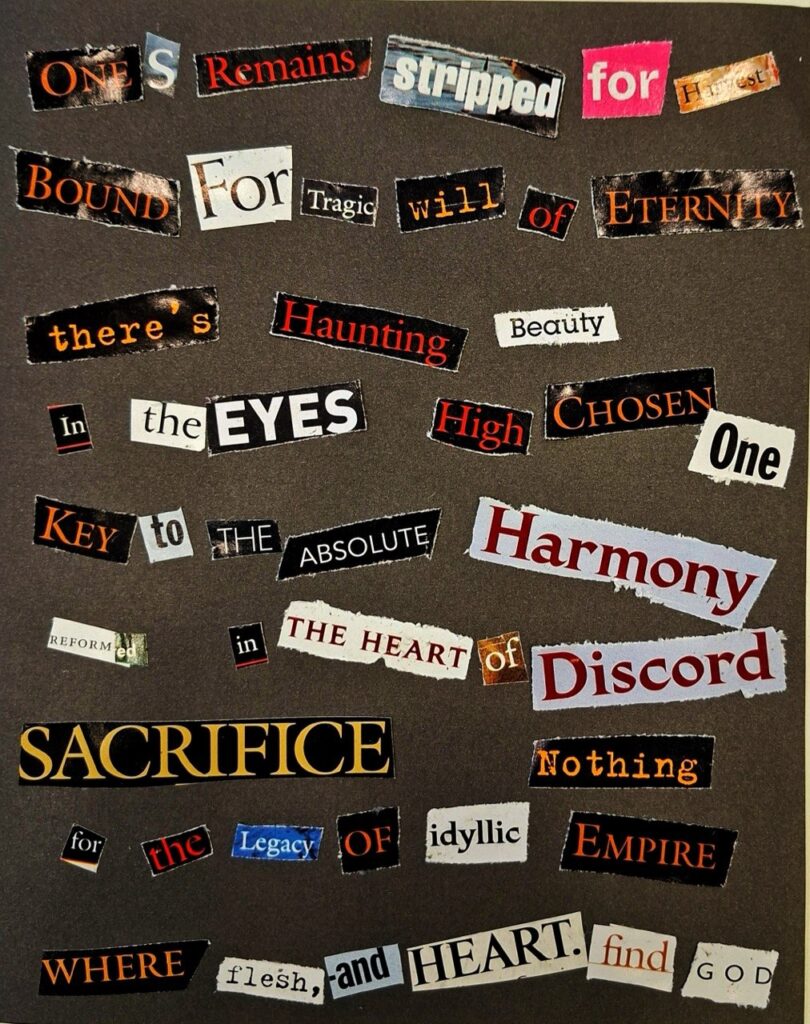
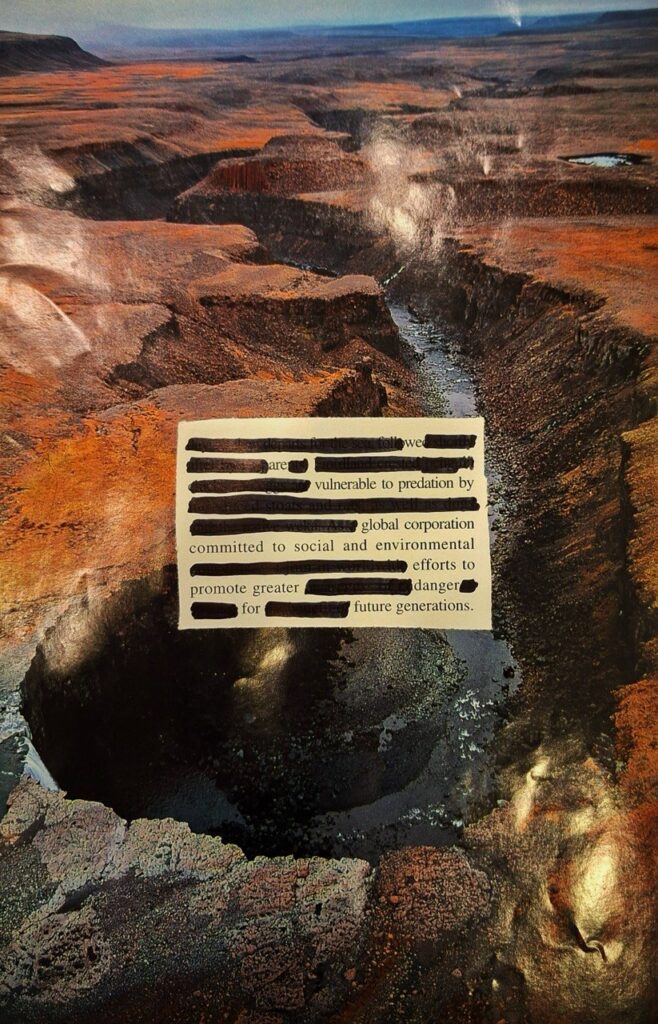
Another option is “blackout poetry.” With this technique, you take an entire page of text and cover up all the words you want to skip, leaving behind only the specific words that form a brand-new poem or sentence.
Text can be added to any normal collage, but you can also make it the main focus of your work by placing it onto a plain background or colored paper.

Here are two quick tips for working with text. First, cut out any words or phrases that could have multiple meanings, and save them for a future project if you don’t use them right away. Go through them each time you make something, they can be a starting point for you collage. Second, don’t be afraid to cut up long sentences, even if they make sense as they are. Combining pieces from completely different sources often creates a much better effect than using one long original sentence.
Workshop #5: Creating collective collage

For the final workshop, participants worked together on one big collage. All they had was a large sheet of paper and some pre-cut pictures placed on the table for quick inspiration. There was no specific topic, task, or guidance. Everyone simply started working on the edge of the paper closest to them, and eventually, the individual pieces began meeting in the middle to form one big project.
Nobody talked about or agreed on a central theme, yet many of the ideas naturally connected. In the end, the final picture actually made a lot of sense.
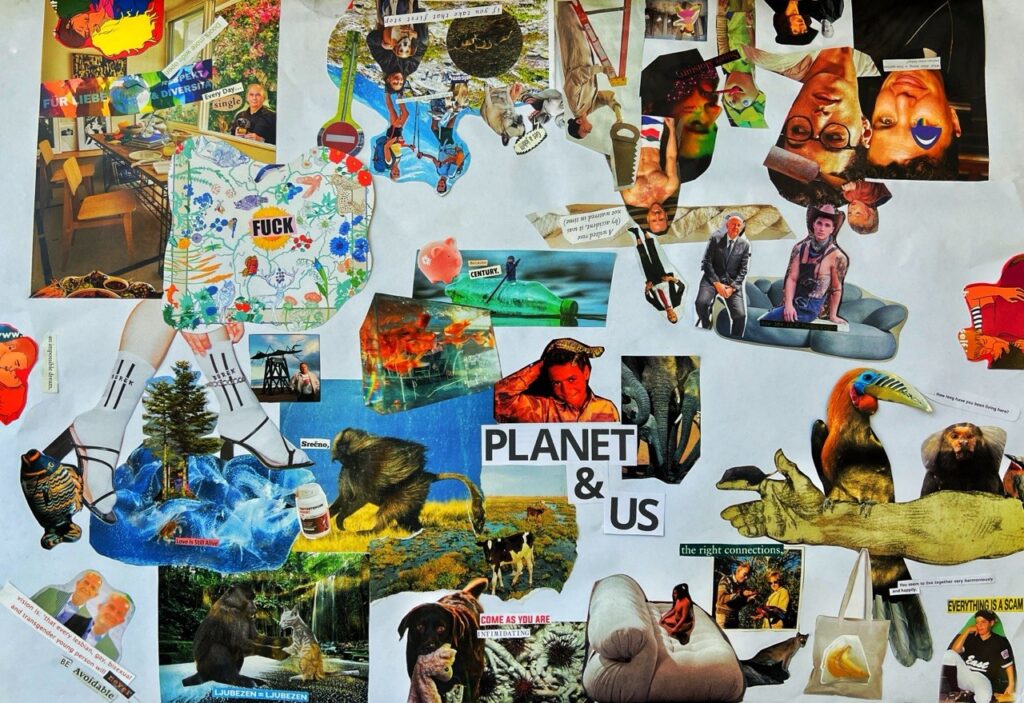
The process can look very different depending on the group. Making a collective collage with close friends or partners is a different experience, as you tend to talk much more, share inside jokes, and build on each other’s ideas easily.

What’s next?
There are infinite ways to use collaging, whether you combine different methods or mix collage with other art forms. You can add handwritten text or embroidery, or turn your finished pieces into badges and fridge magnets. Collages also make great bookmarks and custom postcards. You can make them purely for fun, or use them as a relaxing form of art therapy.

No matter how you choose to approach it, collaging is a great way to slow down, play with materials, and express yourself without any pressure.
Join our next workshop and try it out for yourself!